
Russian Foreign Minister Sergei Lavrov discussed tensions between Afghanistan and Pakistan with his Afghan counterpart, Amir Khan Mottaqi, following US-Israeli strikes on Iran, emphasising the need for political and diplomatic solutions.

An Indian national was killed in an attack on Kuwait International Airport, prompting the Indian Embassy to offer condolences and assistance. The attack, attributed to Iranian strikes, led to the suspension of air traffic and caused casualties and damage.

India-based Iranian actresses Mandana Karimi and Elnaz Norouzi share their deep concerns and anxieties about the escalating crisis in Iran, and reveal the personal toll on their lives and the Iranian diaspora.
Iranian President Masoud Pezeshkian maintained a stance of defensive necessity, noting that Tehran is "forced to retaliate to attacks" but clarified that this does not imply a dispute with neighbouring countries

US President Donald Trump and Chinese President Xi Jinping met in Beijing to discuss a range of issues, including trade frictions and the war in Iran.

Donald Trump has issued a stern warning to Iran, threatening massive retaliation if it attacks Qatar again, following reports of an Israeli strike on Iran's South Pars gas field and an attack on Qatar's LNG facilities.

Chinese President Xi Jinping warned US President Donald Trump that mishandling the Taiwan issue could trigger conflicts between the two countries during wide-ranging talks on trade, Iran, and energy security.

Iran's football federation is in discussions with FIFA about moving their World Cup matches from the United States to Mexico due to concerns about the safety of their players, Iranian football president Mehdi Taj said.

'The real money in India over the coming period is likely to be made in small-cap stocks rather than in the large-cap benchmark names.'

The Indian embassy in Tehran has earlier stated that it is facilitating the safe movement of nationals who wish to leave Iran.

Kerala Chief Minister Pinarayi Vijayan has expressed concern over the situation in the Gulf region following the US-Israel attack on Iran and has urged the central government to take necessary steps to ensure the safety of Indian nationals residing there.

Donald Trump asked countries involved in the peace talks with Iran to sign on to the Abraham Accords, which deal with establishing diplomatic, economic and security ties between Israel and Arab nations.

'Much will depend on the position of the United States.' 'It will have to be seen to what extent the US will be more interested in achieving some form of a deal and to what extent Israel will be allowed to continue to carry out both airstrikes and the killing of Iranian officials.'

This threat comes as the assembly of experts in Iran has reportedly reached a majority consensus regarding the successor to the late Supreme Leader Ayatollah Ali Khamenei, according to the Tehran-based Mehr News Agency (MNA).

Iranian President Masoud Pezeshkian stated that Iran is considering various paths to address regional tensions, including negotiations conducted with dignity and authority, while emphasising that military gains should be reinforced through diplomacy.

The ministry of interior of Bahrain on Sunday claimed that Iran attacked civilian targets in a water desalination plant after a drone attack.

Indian benchmark stock indices, Sensex and Nifty, experienced a significant decline for the third consecutive day, with the Sensex tumbling 1,092 points and Nifty closing below 24,550. This downturn was primarily driven by the India Meteorological Department's forecast of a below-normal southwest monsoon and ongoing geopolitical uncertainties surrounding the US-Iran ceasefire arrangement.

India on Friday launched a highly coordinated, priority operation to safely guide 13 Indian-flagged commercial vessels out of the volatile Strait of Hormuz, the ministry of ports, shipping, and waterways announced on Friday.

Elon Musk's Starlink is in "active and productive discussions" with the Indian government, awaiting final regulatory clearance, including spectrum allocation, to launch its satellite internet services, despite media reports suggesting a freeze on approvals.

Pakistan's Prime Minister Shehbaz Sharif has offered to mediate between the US and Iran to de-escalate the ongoing conflict in West Asia, following a joint US-Israel attack on Iran. Sharif has been in contact with Saudi Arabia, the UAE, and other nations to promote dialogue and diplomacy.

US President Donald Trump met with Chinese President Xi Jinping in Beijing to discuss trade, technology, Taiwan, and the Iran war. Xi Jinping said that 2026 will be a 'historic, landmark year' for China-US relations.

US President Donald Trump will visit China from May 13 to 15 at the invitation of President Xi Jinping. The visit occurs amidst global tensions, including the war in West Asia and trade disputes between the US and China. Discussions are expected to cover China-US relations, world peace, and economic issues.
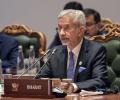
India has expressed serious concerns about the West Asia crisis and its potential impact on energy supplies and maritime stability, urging BRICS nations to find practical solutions to geopolitical challenges and unilateral sanctions.
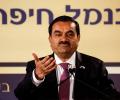
Adani Group has agreed to pay USD 275 million to settle allegations of violating US sanctions on Iran. The U.S. Treasury Department's Office of Foreign Assets Control (OFAC) acknowledged the Indian conglomerate's extensive cooperation and proactive disclosures during the investigation.

Iranian Foreign Minister Abbas Araghchi is in India for a BRICS foreign ministers' meeting, where discussions will focus on the escalating crisis in West Asia and its impact on global energy supply chains.

Pakistan has significantly increased the price of high-octane fuel, impacting luxury vehicle owners, while also seeing increases in petrol, diesel, and airline fares due to rising global oil prices.

Iran's state media cited the spokesperson for the Central Headquarters of Iran's military to claim that a United States military refuelling plane was shot down by a missile fired by resistance groups in western Iraq. The spokesperson further told Press TV that all six service members on board had been killed.

'Strikes into the Gulf countries are proof that the security guarantees offered by the US are ineffective and that the Gulf countries cannot rely on American security assurances for their safety.'

If Iran and Oman choose to charge a fee for rendering services to vessels using their territorial waters, so be it. The US is indulging in an irrationally self-destructive act, notes Ambassador M K Bhadrakumar.

Trump claims the United States is performing exceptionally well in its ongoing conflict with Iran, citing weakened Iranian military capabilities and a strong US position.

India has firmly denied allegations that the US Navy is using its ports to launch attacks against Iran, reaffirming its commitment to strategic autonomy and non-alignment in international conflicts.

The IRGC also warned residents to evacuate areas near military bases, security centres and government facilities.

The 2026 FIFA World Cup is set to feature a significant generational divide, with players spanning over 25 years in age. Mexico's Gilberto Mora, 17, will be the youngest, while Scotland's Craig Gordon, 43, will be the oldest. The tournament will showcase a mix of emerging talents and seasoned veterans like Cristiano Ronaldo and Luka Modric, with nations like Panama and Ivory Coast representing the oldest and youngest average squads, respectively.

New Zealand defender Tim Payne's social media profile has exploded over the last few days after an Argentine influencer decided he was the least known player at the World Cup.

With Gulf countries emerging as popular destinations for Indian weddings and pre-wedding shoots, the March-April season had seen a flurry of bookings.

Amid rising tensions, Iran threatens retaliation after the United States confirms sinking its warship, IRIS Dena, in international waters, escalating conflict in the region.

A new report suggests China's maritime vulnerability lies in the Strait of Hormuz, not Malacca, creating strategic competition in the Indian Ocean.

The Iranian military has asserted that its forces successfully targeted and downed a US A-10 aircraft, according to a report by Al Jazeera.

An Indian national has died in Riyadh, Saudi Arabia, under unclear circumstances following recent events. The Indian Embassy is providing assistance to the family and liaising with local authorities.
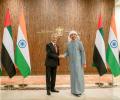
Frankly, was it really necessary in the middle of a fratricidal war for External Affairs Minister S Jaishankar to travel to Abu Dhabi for a one-on-one with the sheikh on April 12?Or, for National Security Advisor Ajit Doval to follow up on April 26? Or, for PM Narendra Modi to follow through today? There are no easy answers, notes Ambassador M K Bhadrakumar.
